
Table of contents
- The Rise of Narrative-Driven Markets
The Rise of Narrative-Driven Markets
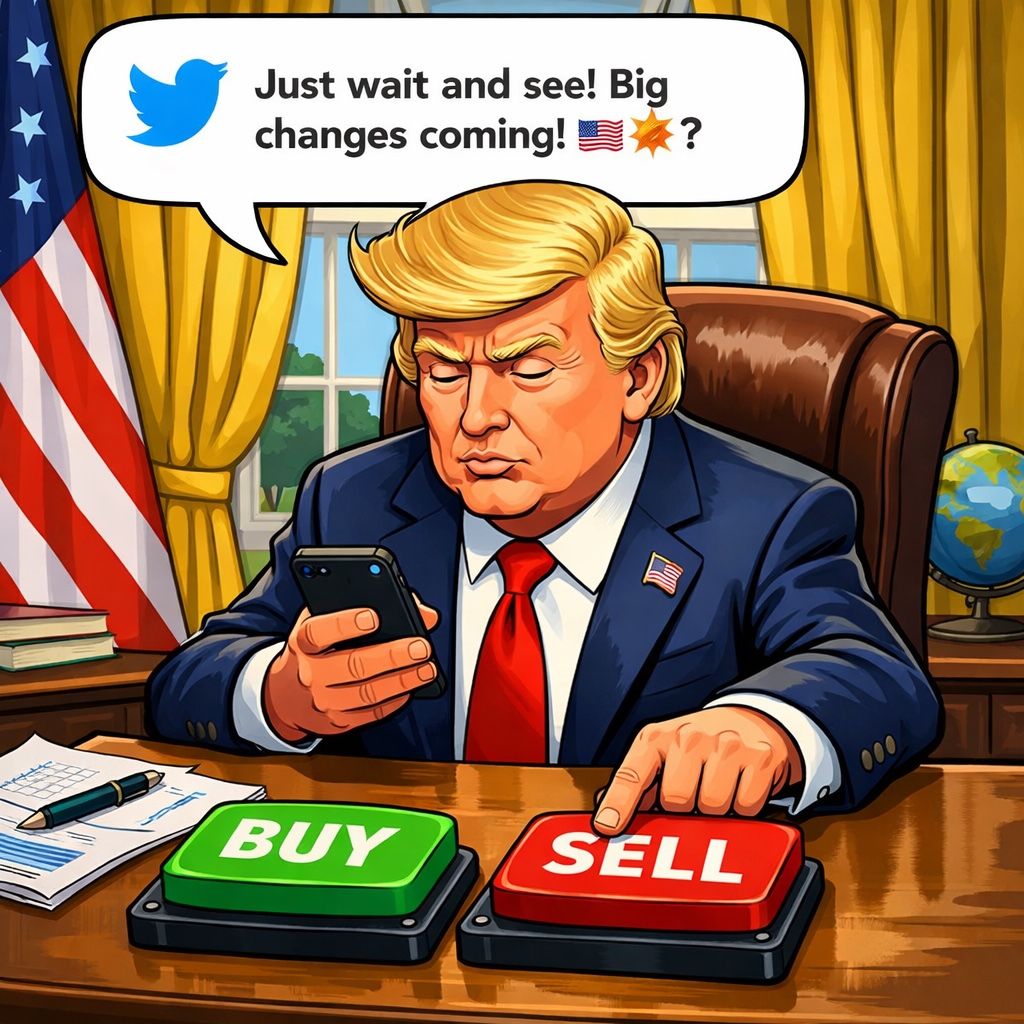
For decades, financial markets were largely governed by two dominant schools of thought: technical analysis and fundamental analysis. Traders either relied on price action, indicators, and chart patterns, or they interpreted macroeconomic data, earnings reports, and monetary policy decisions. But in today’s environment, a third force has emerged one that is faster, less predictable, and increasingly influential: headline trading. At its core, headline trading is the practice of reacting to real-time news, political statements, and social media commentary. Unlike traditional fundamental analysis, which involves structured data releases such as GDP figures or inflation reports, headline trading thrives on immediacy and sentiment. A single comment, interview, or post can shift billions in market capitalization within minutes. In recent years, markets have demonstrated a growing sensitivity to political rhetoric, particularly from high-profile figures. Statements on trade policy, interest rates, geopolitical tensions, or economic outlooks can trigger sharp, short-term volatility. This phenomenon has blurred the line between news and noise, forcing traders to adapt rapidly or risk being left behind.
Technical traders, who once relied on clean chart structures and predictable patterns, now face frequent disruptions. Breakouts fail, support and resistance levels are pierced unexpectedly, and volatility spikes occur without warning all driven by unscheduled headlines. As a result, many technical strategies have had to evolve, incorporating wider stops, faster execution, and a greater awareness of macro sentiment. Similarly, traditional fundamental traders are finding that economic data alone no longer dictates market direction. A strong jobs report or favorable inflation data can be overshadowed by a conflicting political statement. In effect, markets are no longer purely data-driven; they are narrative-driven. The interpretation of information, and who delivers it, often matters more than the information itself.
This shift has given rise to a hybrid trading approach. Successful traders today are those who combine technical precision, fundamental context, and real-time awareness of headlines. Speed is critical, but so is judgment. Not every headline carries equal weight, and distinguishing between market-moving information and background noise has become a key edge. Moreover, the proliferation of social media platforms has accelerated the dissemination of information. Markets now react in seconds, not minutes. Algorithms scan headlines and execute trades automatically, amplifying moves and increasing volatility. In this environment, hesitation can be costly, but overreaction can be equally dangerous.
In conclusion, while technical and fundamental analysis remain essential tools, they are no longer sufficient on their own. The modern trader must navigate a landscape where narratives shape reality, and headlines can override logic. Understanding this shift is not optional it is a prerequisite for survival in today’s markets. The market has evolved. The question is: have you?